

The forecast I used to avoid
I used to think of bad weather as a reason to postpone a photo. Rain made everything inconvenient. Gray skies drained the color from a scene. Wind made it harder to concentrate.
I have learned not to judge an outing by its photographic results.
Bad weather was the best time to curl up with a good book, finish chores, and go down that YouTube rabbit hole.
A clear day always felt like the obvious invitation to take my camera out.
1. Bad weather changes the light
On a sunny day, the sun can be so generous it does most of the work. It shines on a building, sharpens a shadow, and makes that red door pop. That can be beautiful, but it can also make it easy to assume that a scene is giving me everything.
Clouds soften the contrast. Details that might disappear in hard sunlight begin to sit together more gently. A wall, a face, or a quiet interior can hold a wider range of tones. The light becomes less of a spectacle and more of a condition I have to read.
Then there are the brief changes: the brightness that comes through a break in the clouds, the dimness just before a rain shower, the strange, even light after the rain. The sky is no longer a backdrop. It becomes an integral part of my composition, shaping how everything beneath it feels.
2. It gives familiar places a second life
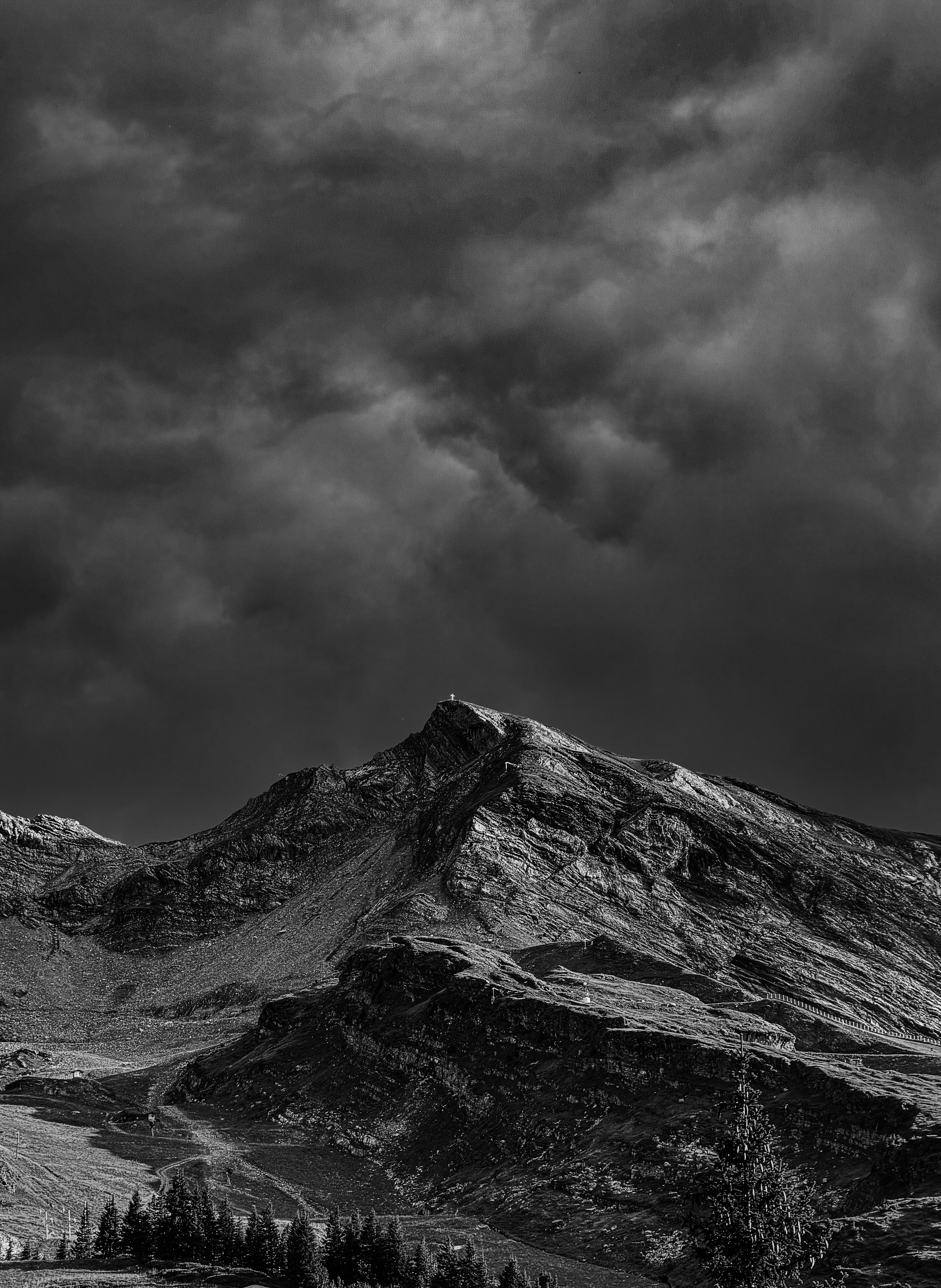
Weather can change a place without moving anything. Rain splashes reflections across the pavement. A familiar street doubles itself in a puddle. Windows catch light differently. Colors darken, and ordinary surfaces begin to hold more texture.
Fog works in another way. It takes details and information away. Buildings soften at the edges. Distance becomes uncertain. A shape becomes undefined. I might not be able to include the whole scene. I have to decide what matters most, quickly, before the fog lifts.
As I am drawn to architecture and geometry, to the way lines and shapes organize a frame, bad weather can loosen that order just enough. A hard outline fades. A reflection interrupts a straight line. A familiar structure becomes something I have to rediscover, and maybe rephotograph.
3. It makes me more present
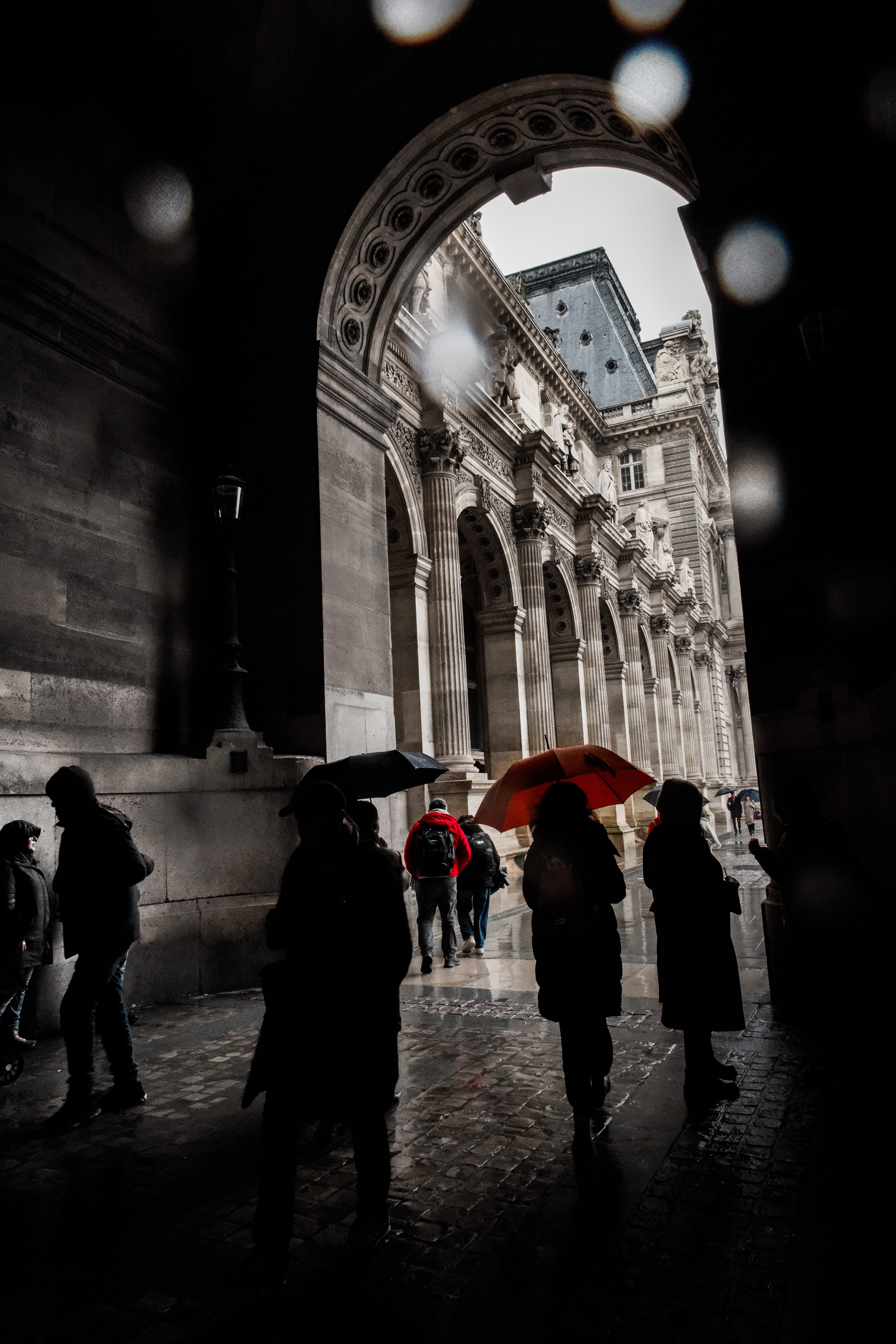
Weather gives people small, revealing things to do. They pull up a hood more tightly. They angle an umbrella as they wait under an awning, or hurry across an open space. These gestures are temporary, and they can make a street photo feel more human.
Street photography is one of the places where I feel least in control, as I cannot arrange the light or decide where everyone should stand. Bad weather makes that even clearer. People move differently. Plans change. A scene can vanish before I can work out in my head what exactly to shoot.
That uncertainty can be is uncomfortable. It reminds me that a photo does not have to be planned down to the last detail. I must accept that my role is simply to be present when a gesture, a reflection, or a passing figure brings the frame together.
4. It asks me to pay closer attention
When conditions are challenging, I find myself paying attention to smaller details. I look at the edge of a shadow, the shine on a railing, the empty space around a person, the way a color holds against a nearly monochrome street. I have learned to stop waiting for a grand subject to announce itself.
This is one reason I like love shooting ordinary scenes. A chair, a doorway, a pavement, someone pausing out of the rain: none of these have to be important. The weather adds a layer that can make the scene more interesting. It has taught me that seeing can be a slower, more active process.
I’ve long admired Michael Kenna’s photographs, many of which show how beautifully bad weather can shape a scene, as shown below (Michael Kenna, Constellation, 2025, pp. 86-87).
I also recommend having a look at Lost In the Beauty of Bad Weather by Christophe Jacrot.
5. Working with the conditions
There is a practical side, of course. I need to protect the camera, watch where I step, hold my umbrella, if any, and know when it’s time to pack up and go home. I don’t want discomfort to become a performance, or a wet camera to become my story. I must stay open to what the conditions may offer while taking reasonable care.
6. The photo won’t always be perfect
I still come home with frames that feel like trash. The light is flat. I clicked too late. The weather may overwhelm my frame instead of bringing it together. That’s all part of the adventure. There is no promise that all my discomfort will be rewarded.
I have learned not to judge an outing by its photographic results. Sometimes, I return with a different sense of a place, or with a detail I want to look for next time.
Perhaps that is what bad weather offers: not better pictures on demand, but a reason to manage expectations and enjoy uncertainty. It interrupts the idea that a shot depends on perfect light, a perfect subject, or a perfect plan.
When the forecast does not look promising, don’t be the first to say, “There will be nothing to see.” The rain might redraw a familiar street. The clouds might quiet the light. Someone might pause beneath an awning, and for a moment the whole scene might make sense.
I may still get wet. I may come home with nothing I want to keep. But the weather will have changed the way I see, and that’s where the photo begins.
Do you reach for your camera when the forecast turns gloomy, or does bad weather usually keep you indoors? Tell me about a photograph you might have missed if you’d stayed home.